
087
Attentional safe harbors, corporate misbrands, what "community" means in the age of AI
Tim here: Like so many others, I was inspired by the recent TED talk given by Carole Cadwalladr making the rounds.
In it, she sets the stakes of her return to the stage. The last time she spoke at TED nearly cost her everything - her finances, career, and reputation. Not to mention the emotional and physical toll it took.
It’s better listened to than described, but the main through-line is that data is central to autocratic control. It was that way in 1930s Germany, and remains true today.
Right now, our personal data is far more exposed than we should be comfortable with it being, but there are steps we can take to protect ourselves. You can see her talk here.
Towards the end, she shares an experiment asking ChatGPT to write her TED talk in her style, and likeliness. And it does a convincing job.
But shares that this moment was about taking her story back.
From the algorithm.
From the smear campaigns.
From the lies and inflammatory content.
To reclaim a narrative that has been digitally distorted over the last four years. To defy the patterns AI was perpetuating in a way that only a human can do.
Thanks for reading.
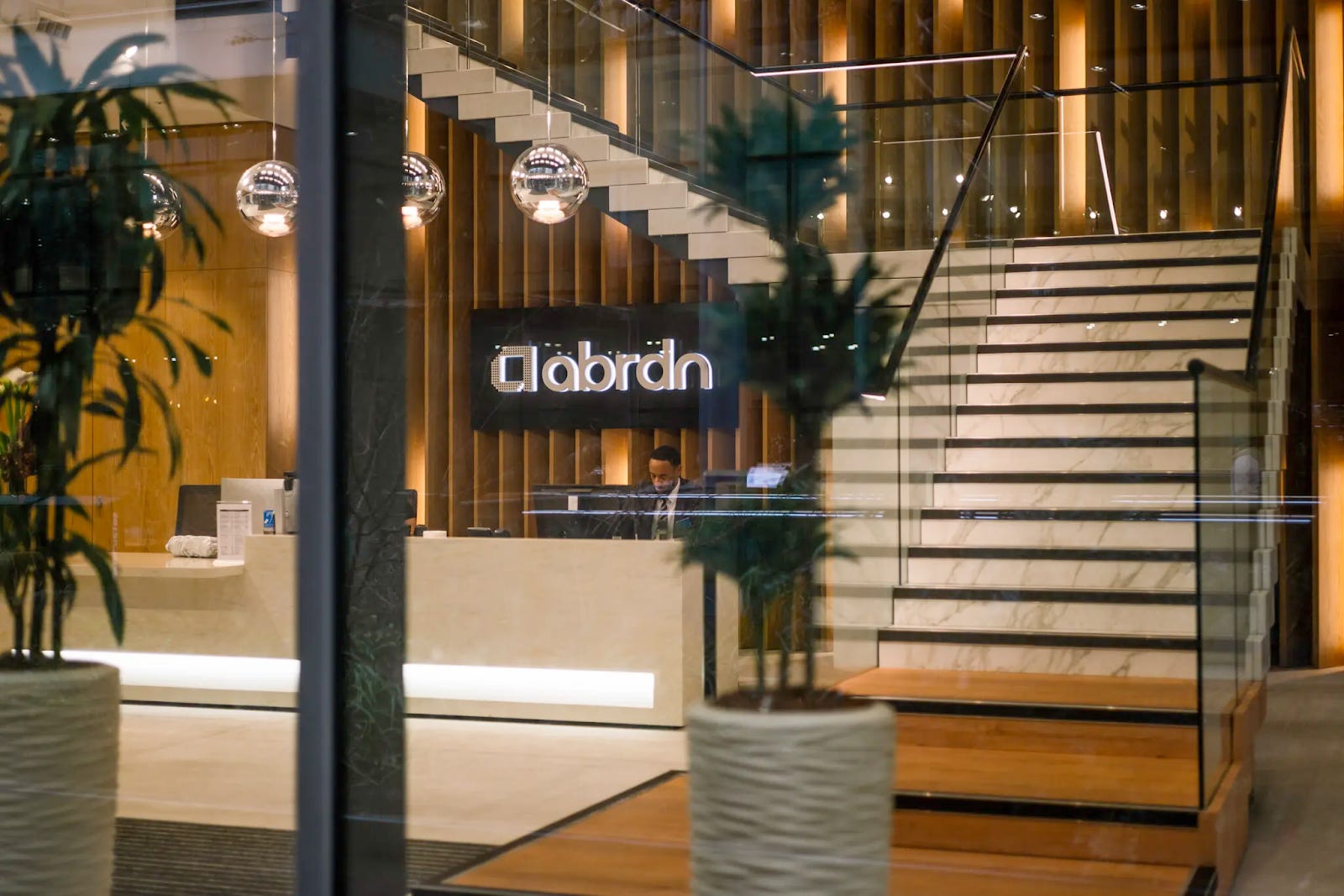
Miscues, misfires in corporate branding.
Rebrands often signal a strategy shift.
If it fails to lift performance or reputation with customers then it becomes cause for scrutiny. NY Times details a few recent fails.
Two takeaways to consider when going through these initiatives:
Is it aligned with our purpose (something enduring versus fleeting)?
“Often, when companies try to appear trendy, “by the time they get to it, it’s been around for too long. It’s like your parents doing it — it doesn’t seem right.”
Does this signal what we want to be communicating?
“When it comes to financial companies, another aspect to consider is: Do these businesses want to be cool, or should they go for a name that projects security and responsibility?”
~~~
Modern day purpose of letters.
In the age of instant communications letters exist outside of time.
The rush to read or reply to them is usually removed. There's an implied privacy to the communication that yields intimacy. They’re tangible, so they’re often stored, saved and returned to again.
According to Rachel Syme, author of Syme’s Letter Writer: A Guide to Modern Correspondence, the goal of medium stands out in modern times.
To deepen connection.
“You’re just getting to know one another, you’re just writing about what you’re thinking and what you’re feeling. It’s so low stakes that in so many ways, I find it to be the most freeing way of talking to anybody else. You’re writing with a goal of a deeper connection with another person. I don’t know that many mediums that have that goal any more.”
Contrast the purpose of letters with say the medium of Slack where notifications can trigger panic and the most dreaded opening is “hey”.
~~~
Takeaways from 12 TikTok heavy users.
The unique strengths of the app, according to those who use it often.
Gets them them hard-to-find information, efficiently (for example, a unique hairstyle that they want to show to their stylist)
Gives them access to a marginalized perspective (from say, LGBQT in a small rural community)
Gives them a boots on the ground view (from say, a live, breaking news cycle)
Gets them unadulterated, educational content (like making pizza dough for instance, but without the fluff, filler and ad interruptions)
Gives them a balanced perspective on politically charged issues (through the comments or via community notes feature)
These are not specific to TikTok necessarily but the app is valued for these aspects.
All agree that the app acts as an extension of their personality because of data, and although that may be a little invasive, that’s OK. And also that it’s “consuming,” “addicting” and occasionally “toxic.”
Underlying all is a sweeping critique at the incumbent summed up here:
“Google’s just so curated for its ad revenue now. It’s hard to find the information.”
~~~
Attentional safe harbors.
98% of Americans own a smartphone.
The Master’s bans them. Instead attendees turn to digital cameras to capture the experience
“Every year at the practice rounds now feels like circa 2010 at the practice rounds (pictured above) — back when digital cameras were everywhere, not just at the Masters, and only 23% of Americans owned a smartphone.”
A rare attentional respite. As the WSJ reports, this mandate spared attendees from tuning into recent market frenzy An attentional safe harbor, during the economic storm.
~~~
AI to spur trial.
Fragrances are one of the hardest products to sell online, without trial.
AI is changing that dynamic.
“The Fragrance Finder, Skin Match Technology’s AI-driven tool, assists online shoppers in finding their perfect scent. By allowing users to input an existing fragrance they love, the system cross-matches it with the best alternatives. In addition to fragrance notes and olfactory families, the tool considers personal style, packaging preferences, budget, seasonality, occasion, and longevity.”
There are two clear consumer barriers the tool aims to overcome:
Guidance. You’ve used this, therefore you’ll like that.
Visualization. Bring the scent’s notes and composition to life.
Both of which are where AI can come into play. Helping to break routine in a category that is bought habitually, and rarely online. Discovery of something optimally experienced in person, online.
~~~
“Community” in the age of AI.
5 takeaways by Edwin Wong from the Verge on what online communities will be.
In short, community may be going back to the basics. Authentic, trusted, way less scaled, but infinitely more valuable digital/physical places to share experiences.
Big platforms are losing trust, and disruption is here. Legacy technology (e.g., Google) and social platforms are rapidly losing ground as trust and authenticity fade, with more people flocking to AI chatbots, niche communities, and platforms like TikTok. This signals a massive shift and opens the door for disruptive entrants that will offer more authentic, trusted experiences. Forty-two percent of consumers find that search engines like Google are becoming less useful.
Digital spaces are coming up short compared to relationships. While social media connects people, most believe it has fueled societal divisions by creating echo chambers. The appetite for genuine, meaningful connections is growing — and platforms that can facilitate this “connection shift” will redefine the next phase of the digital community. Sixty percent of respondents view the state of social media negatively, expressing it feels like a place of never-ending product placements and makes them feel like a number in a giant algorithmic machine.
Content drives community, even for digital experiences. At the heart of digital communities is content, which includes posting or just watching from the sidelines. Even those who simply consume content (the lurkers) still feel connected and part of the group. Engagement isn’t always about being loud. Sometimes, just being present is enough to create meaningful connections. Ninety percent do nothing; 9 percent post once in a while; and 1 percent do 80 percent of the content creation.
AI is powerful but not always welcome. AI is transforming digital spaces, but the rise of automation has left many uncomfortable. People don’t want their interactions to feel automated or manipulative. They want human-driven engagement. Platforms that strike the right balance will be the winners. Nearly half of consumers say they’d rather be a part of a community that doesn’t allow AI-generated content.
Smaller, purpose-driven communities are the future. The desire for smaller, more intimate communities is undeniable. People are abandoning massive platforms in favor of tight-knit groups where trust and shared values flourish and content is at the core. The future of community building is in going back to the basics. Brands and platforms that can foster these personal, human-scale interactions are going to be the winners.
~~~
AI flood.
Visiting a public library it’s safe to assume 1) a level of curation and 2) that vetting has taken place.
This is rapidly changing. From 404:
“Low quality books that appear to be AI generated are making their way into public libraries via their digital catalogs, forcing librarians who are already understaffed to either sort through a functionally infinite number of books to determine what is written by humans and what is generated by AI, or to spend taxpayer dollars to provide patrons with information they don’t realize is AI-generated.”
Two thoughts from this.
First is a revisiting of carryover trust. We assume certain standards from institutions like libraries, but that doesn’t necessarily apply today.
Next is the volume issue of AI.
Ebook catalogs compete on comprehensiveness and scale. Meanwhile overburdened librarians have the impossible task of trying to filter against generative AI’s ability to create an infinite amount of low quality information. This just means AI content continually creeps into libraries.
All of which elevates the importance of institutions that safeguard trusted, vetted information, even if it is in part, AI generated/vetted.
~~~
Right problem to be solved.
Tinder has unveiled the Game Game.
Powered by OpenAI, it lets users practice their pick-up lines on an AI before trying them on the app. The goal being to spark real connections by making dating feel less like a chore and more like something to look forward to,
However as Casey Newton questions whether it was the right problem to be solved:
“I think my main takeaway from this would be that Tinder has completely lost focus on what I care about as their customer, right? It's like my problem back when I was dating was not like, I find it so hard to talk to people. Although I, you know, I'm sure I know people do have that challenge. It's, hey, I'm getting all these one word answers back from people or I was talking to this person and now they stop responding to me. And I wonder if there are other things that Tinder could be working on rather than coming up with these like, you know, shiny little novelties to distract people from the fact that they got ghosted again.”
This plays into a larger dynamic. Where blame (if a person is not successful in say, online dating) is shifted from the platform to the user. This is well intentioned and might be helpful practice for some, but it will not change any issue with the underlying platform dynamics.
~~~
Make America healthy again.
For a decade plus, Him’s has been priming people to view everyday health and the natural-aging processes as problems that can be tweaked and optimized. In other words, Hims offers…
OS updates to the human body
It’s Super Bowl took that concept a step further.
“The one-note, full-volume message in the Hims Super Bowl spot is that everything is rigged against you—keeping you overweight, making you unhealthy—and that you’re right to be mad about that.”
This is a broadening of message, aimed at a larger audience during a political moment ripe for it. The subtext is that it’s not your fault, Hims is here for you. An extension of its original messaging, but with hooks in the current cultural moment to grab attention.
The message? You’re right to be upset at a system keeping you unhealthy. With Hims you can finally fight back.